
Dark Exterior House Colours in Hobart: What You Need to Know Before You Paint
But while these colours look impressive at first, they don’t always perform the way people expect once applied to a real home. Factors like surface preparation, sunlight exposure, and the type of substrate all play a role in how well dark exterior paint colours hold up over time.
Before choosing a dark colour for your home, it’s important to understand how they behave in Hobart’s conditions—and whether they’re the right fit for your property.
Why Dark Exterior Colours Can Be a Problem
While dark colours can look incredible when first applied, there are a few common issues we see on homes across Hobart that most people don’t expect.1. They Show Every Imperfection
Dark colours highlight everything—joins in weatherboards, filler, old repairs, and even slight surface inconsistencies.
On older homes especially, what might look smooth in a lighter colour can suddenly become very noticeable once a dark colour goes on. The result can be a finish that looks great from a distance, but far less consistent up close.
2. Heat Build-Up and Movement
Darker colours absorb significantly more heat than lighter ones.
On timber homes, this can lead to increased expansion and contraction throughout the day. Over time, that extra movement can contribute to cracking, movement in joints, and a shorter lifespan of the coating system.
3. Faster Fading and Wear
This means what starts as a rich, deep colour can lose its depth sooner than expected.
4. Higher Maintenance Over Time
Touch-ups on dark colours are far more noticeable. Differences in sheen or slight variations in colour can stand out, making maintenance more difficult and often more frequent.
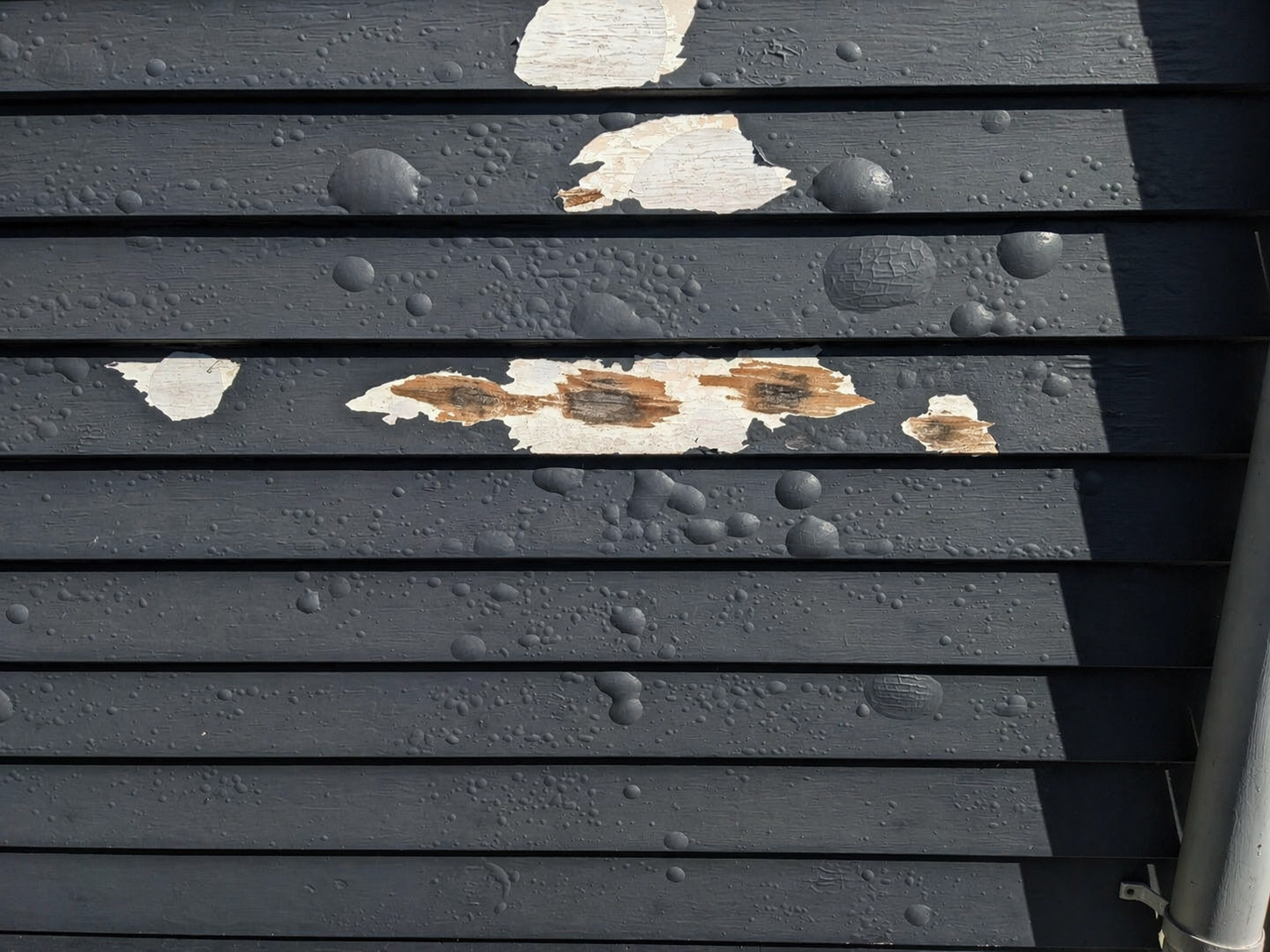
5. Blistering and Paint Failure in Direct Sun
In areas exposed to full sun, especially on darker colours, we often see issues like blistering and early paint failure.
Darker shades absorb more heat, which can cause the surface temperature of the paint to rise significantly—particularly during Hobart’s intense summer sun. When this happens, any moisture trapped beneath the surface or within the substrate can expand, leading to bubbling or blistering in the coating.
This is more common on older homes or surfaces that haven’t been properly prepared, but even on newer work, darker colours can increase the risk if the right system isn’t used.
When Dark Exterior Colours Work Well
While dark exterior colours can come with a few challenges, that doesn’t mean they should be avoided altogether. When used in the right situations—and applied properly—they can look incredible and perform well over time.
1. On Newer or Well-Prepared Surfaces
Dark colours tend to perform best on homes with smooth, consistent surfaces.
New builds or fully restored exteriors (where everything has been properly sanded, filled, and primed) are far more suited to darker finishes. This reduces the chance of imperfections showing through and helps achieve a cleaner, more uniform result.
2. With the Right Preparation and System
This is where most issues come from.
Dark colours aren’t forgiving, so the preparation underneath needs to be spot on. Full preparation, correct priming, and using a high-quality exterior system all play a big role in how well the finish holds up—especially in Hobart’s conditions.
3. Used as Feature Areas Instead of Full Exteriors
In many cases, dark colours work best when they’re used selectively rather than across the entire home.
Feature walls, trims, or architectural elements can give you that modern look without exposing the entire exterior to the downsides of a full dark colour scheme.
4. On the Right Style of Home
Some homes suit dark colours far better than others.
Modern builds with clean lines and minimal detailing tend to carry darker tones well. On older weatherboard homes, the same colour can highlight imperfections and create a very different overall look.
Dark exterior colours can absolutely work—but only when the home, the preparation, and the application are all working together. Without that, they often don’t perform the way people expect.
Final Thoughts on Dark Exterior Colours
Dark exterior colours can create a sharp, modern look and there’s no denying they’ve become a popular choice across homes in Hobart.
But like anything in painting, it’s not just about how it looks on day one—it’s about how it performs over time.
From highlighting imperfections to handling heat and sun exposure, darker colours come with a few trade-offs that are often overlooked. That doesn’t mean they shouldn’t be used—but it does mean they need to be carefully considered and applied properly to get the best result.
At the end of the day, the right colour choice comes down to the home itself, the condition of the surface, and the level of preparation going into the job.
Thinking About Painting Your Home?
If you’re considering repainting your home and weighing up colour options, it’s worth getting advice before committing—especially with darker tones.
Choosing the right system and approach can make a big difference not just in how your home looks, but how long it lasts.
If you’re planning an exterior repaint, it’s also worth understanding how much it typically costs to paint a house in Hobart, as preparation and product choice can affect the overall price.